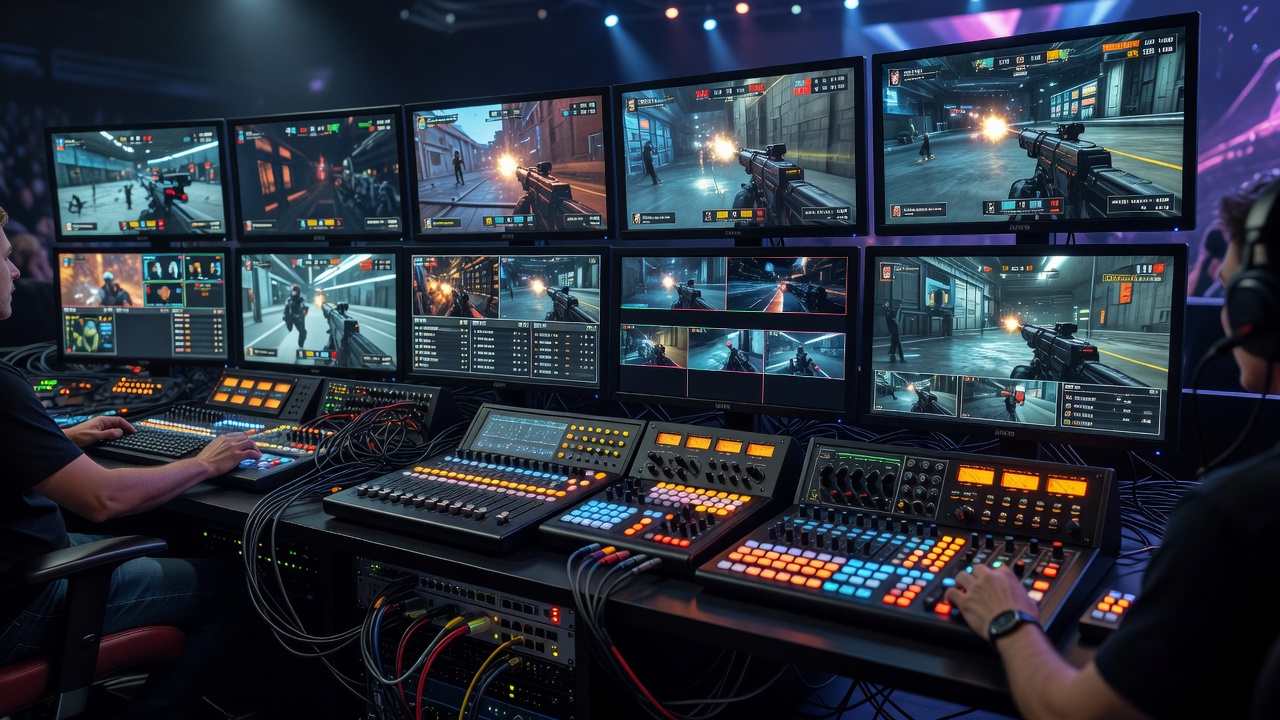
Live competitive gaming is an unforgiving place for unresolved assumptions. Match lengths vary, technical pauses happen and the editorial priority remains the competition. A sponsorship that depends on an exact moment, a particular winner or an untested platform connection needs a fallback before it needs another presentation slide. Good production makes these dependencies visible while there is still time to change them.
The producer’s role is not simply to make the approved idea happen at any cost. It is to reconcile the audience benefit with the permissions, time, people and technical environment available. When a condition cannot be met, the responsible response may be to simplify the activation or move it to a different surface.
Confirm what has actually been bought
Build a rights matrix before creating final assets. List each proposed use of a game image, team mark, player likeness, tournament name, creator appearance, music track and broadcast clip. Beside it, record the permission holder, permitted territory, duration, channels and approval conditions. Ownership and licensing arrangements differ; access to one asset does not imply clearance for every derivative version.
Do not assume that a livestream permission includes paid social advertising, archive edits or creator reposts. Music can involve separate rights in the composition and recording. Talent agreements may distinguish live participation from later commercial use. WIPO’s copyright guidance provides general context, but the actual contract and relevant law determine the permissions needed.
Write the production brief
A useful production brief answers a small set of concrete questions. What is the audience benefit? Where does the activation appear? What is the sponsor entitled to receive? Who produces each element, who approves it, and by when? Which constraints are fixed, and which can change? Keep the final version accessible to the people who will operate the show, not only the people who commissioned it.
- Experience: audience, action, placement and intended contribution.
- Assets: file formats, dimensions, language versions, captions and disclosure text.
- Ownership: a named decision-maker for each production and approval task.
- Delivery: rehearsal, handover, live cues and escalation route.
- Evidence: reporting access, collection method and known limitations.
- Fallback: the safe alternative if the primary execution cannot run.
The budget should distinguish rights fees from production, talent, travel, venue services, moderation, accessibility, measurement and contingency. There is no universal percentage that makes this split correct. Ask for itemised assumptions so a late scope change can be evaluated rather than absorbed invisibly by the production team.
Give approval a real deadline
Approval chains often fail because everyone is consulted but nobody has final authority. Name the person who can approve the sponsor claim, the person who can clear game or event material, and the person who can authorise a live change. Agree the latest point at which each element can change without compromising testing. Record approvals in a shared log with asset versions attached.
Use an asset register that distinguishes draft, approved and superseded files. A clear naming convention reduces the chance of an outdated graphic reaching air. Keep accessibility and disclosure checks in the same workflow as brand and technical checks; otherwise they are easily lost when a late revision replaces an earlier version.
Rehearse the dependencies
Test the full route, not just the graphic in isolation. A participation format may work on a designer’s laptop but fail when moderation, venue connectivity, browser permissions and broadcast latency are included. Rehearse the operator’s actions, the commentator cue and the audience instruction. Confirm who can stop the integration if it blocks essential coverage or introduces unsafe material.
For an on-site build, coordinate with the venue’s safety procedures and competent local contractors. Crowd movement, electrical work, access routes and emergency arrangements require expertise beyond brand production. The UK Health and Safety Executive’s event guidance is a useful reference, though local legal requirements and venue rules must be assessed for the actual event.
Plan the ending as carefully as the launch
Define what “delivered” means. Capture approved evidence of placement without gathering unnecessary personal data. Record missed elements and substitutions honestly. If a contracted deliverable changes, route the issue through the agreed commercial process rather than quietly counting an unrelated exposure as equivalent value.
After the event, gather operational observations while they are fresh: unclear cues, unexpected queues, inaccessible instructions and time spent on manual work. Separate these lessons from the sponsor’s outcome report. Both matter, but they answer different questions. A disciplined handover leaves the next team with better knowledge, not just a folder of final graphics.
Sources & further reading
- WIPO: copyright — background on rights and protected works.
- HSE: event safety — planning and operational safety guidance.
- Twitch branded-content policy — disclosure and category restrictions.
- W3C WCAG 2.2 — accessibility criteria for digital assets.
This is an editorial planning guide, not legal, safety or engineering advice.